A Singapore to Bali Cultural Guide: Navigating Etiquette, Cuisine, and Commerce

The Friday 5 PM release from a CBD office tower has its own distinct energy. The work week dissolves, and for many in Singapore, the mind drifts towards a familiar, accessible escape. The short, direct flight from Changi to Denpasar—less than three hours—is a portal not just to another location, but to a different rhythm. You’ve booked the flight, secured the villa in Seminyak or the boutique hotel in Canggu. But beyond the logistics lies the texture of the experience: the subtle codes of conduct, the negotiation of a price in a bustling market, the search for a meal that satisfies both palate and principle. A trip from Singapore to Bali is straightforward, but a truly resonant one requires a deeper understanding of its cultural landscape.
How does one move from being a mere tourist to a considerate guest? This guide addresses the nuanced questions that arise after the plane tickets are confirmed. It’s for the discerning traveler who understands that the quality of a trip is measured in meaningful interactions, not just Instagram posts. We explore the essential cultural pillars—etiquette, Halal dining, and bargaining—to ensure your weekend trip or extended stay is as respectful as it is restorative. See also: Contact pricing.
Navigating Balinese Social Etiquette: The Art of ‘Sopan Santun’
The foundation of social interaction in Bali is sopan santun, a concept encompassing politeness, modesty, and respect. While Balinese people are famously accommodating, observing local customs elevates your interactions from transactional to genuinely courteous. The Balinese Hindu belief system, Agama Tirta, permeates daily life, influencing everything from greetings to gestures. It’s a culture where maintaining a calm demeanor and avoiding confrontation are highly valued.
One of the most fundamental rules is the use of hands. Always use your right hand when giving or receiving something, including money, and when touching someone. The left hand is traditionally considered impure. Similarly, the head is regarded as the most sacred part of the body, the seat of the soul. Refrain from touching anyone’s head, even a child’s, as it can be perceived as deeply disrespectful. This cultural framework is guided by complex systems like the 210-day Pawukon calendar, which dictates the timing of thousands of temple ceremonies, or odalan, that you might encounter during your visit.
“Visitors often focus on the big ceremonies, but the essence of Bali is in the small, daily acts of respect,” notes Dr. Ni Made Sari, a cultural historian based in Denpasar. “A gentle smile, a soft tone of voice, and using the right hand for a transaction at a warung—these are the gestures that build a bridge of mutual respect.”
When visiting a local home, it’s customary to remove your shoes before entering. If offered a drink, it is polite to wait until your host invites you to drink before taking a sip. These small observances demonstrate an awareness and appreciation for the local way of life, transforming your Bali from Singapore experience into a more immersive cultural exchange.
Temple Decorum: A Guide for Visitors from Changi to Denpasar
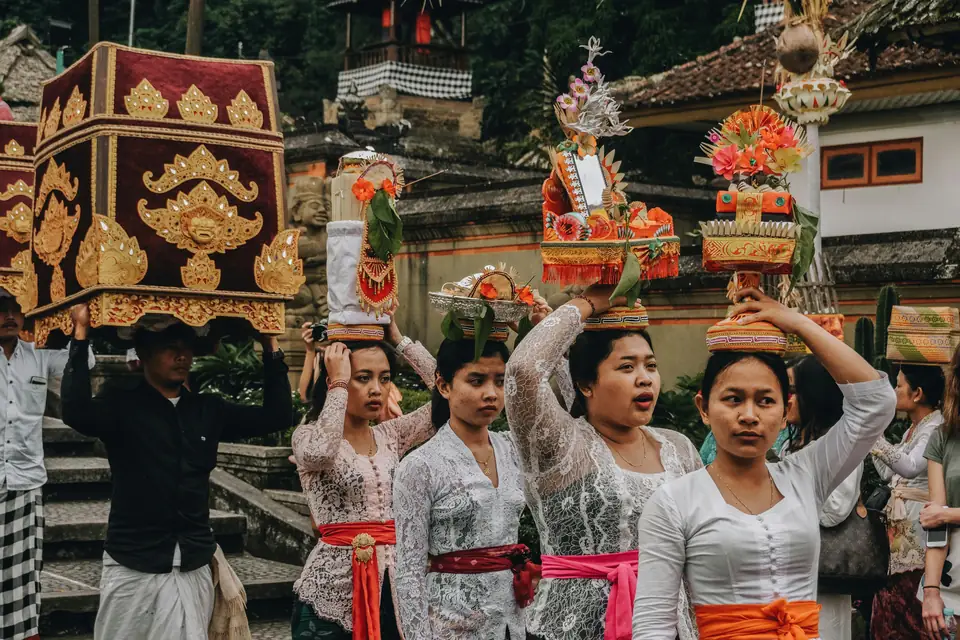
Bali is often called the “Island of a Thousand Puras,” and a visit to at least one of its sacred temples is essential. Sites like Pura Tanah Lot, perched on a rock formation by the sea, or the Uluwatu Temple on its dramatic cliffside, are integral to the island’s spiritual identity. Approaching these places requires a specific code of conduct. The first rule is dress. Both men and women are required to cover their legs with a sarong and their waist with a sash (selendang). These items are not just for modesty; they are symbolic elements required for entering holy ground.
Most major temples, including Pura Tirta Empul where locals perform purification rituals, will have sarongs available for rent at the entrance, typically for a nominal fee of IDR 10,000 to 20,000 (less than USD 1.50). The entrance fee for a site like Tanah Lot is approximately IDR 60,000 (about USD 4) for foreign adults. It’s a small price for access to a place of profound cultural significance. Once inside, conduct should be muted and respectful. Avoid pointing your feet at altars or religious icons, as feet are considered the lowest part of the body. If you encounter a religious procession or ceremony, maintain a respectful distance and never walk in front of a praying individual. Flash photography is generally forbidden during ceremonies. See also: book Home.
Key points for respectful temple visits:
- Always wear a sarong and a temple sash (selendang).
- Never point your feet towards shrines or sit higher than a priest (pemangku).
- Women should not enter a temple during their menstrual period.
- Offer a small donation (punia) where appropriate; it is a gesture of goodwill.
Adherence to these simple rules ensures that these sacred sites remain preserved and respected by all who visit, making your Singapore Bali flight a gateway to genuine cultural appreciation.
The Halal Food Landscape: A Guide for Muslim Travelers from Singapore
While Bali is a Hindu-majority island, it exists within the world’s largest Muslim-majority nation, Indonesia. This creates a unique culinary environment where Halal food is widely available, though it requires some awareness to locate. For the significant number of Muslim travelers from Singapore, finding food that adheres to dietary laws is a primary concern. The key is to look for the official Halal certification from the Majelis Ulama Indonesia (MUI), a green logo that is often displayed prominently in restaurant windows or on menus. See also: explore Singaporean Visa Bali.
Areas with high tourist traffic like Kuta, Legian, and Seminyak have numerous Halal-certified restaurants. Many eateries, even if not officially certified, are Muslim-owned and operate on Halal principles (no pork, no alcohol in cooking). Classic Indonesian dishes like Nasi Padang or Ayam Betutu (Balinese slow-cooked chicken) are frequently Halal. For a guaranteed authentic and Halal meal, travelers can visit renowned spots like Ayam Betutu Khas Gilimanuk, which has several branches, or Warung Nikmat in Kuta, a local favorite for its budget-friendly Javanese buffet. For a more refined experience, Bale Udang Mang Engking in Kuta offers Sundanese cuisine in private bamboo gazebos over a fish pond, with a full Halal menu.
| Dining Style | Description | Price Range (per person) | Example |
|---|---|---|---|
| Local Warung | Casual, often family-run eatery serving authentic Indonesian dishes. Many are Muslim-owned. | IDR 50,000 – 150,000 (USD 3 – 10) | Warung Nikmat, Kuta |
| Mid-Range Restaurant | Established restaurants with diverse menus, often with official MUI Halal certification. | IDR 200,000 – 500,000 (USD 13 – 33) | Bale Udang Mang Engking, Kuta |
| Hotel Dining | Major international hotels, particularly in Nusa Dua, offer certified Halal kitchens or dedicated Halal menus. | IDR 400,000+ (USD 26+) | The Mulia Resort, Nusa Dua |
The prevalence of apps like Gojek also makes finding Halal food simple. Its GoFood feature allows users to filter for Halal-certified restaurants, delivering a wide array of options directly to your hotel or villa. See also: Singapore to Bali Travel Guide About.
The Art of Bargaining: Market Transactions from Seminyak to Ubud
For many, visiting the markets of Bali—from the sprawling Sukawati Art Market to the more curated stalls at the Ubud Art Market—is a highlight. The practice of bargaining is an integral part of this experience. It’s not an argument, but a form of social commerce, a friendly and expected interaction. The key is to approach it with good humor and a realistic perspective. The initial price quoted to a tourist is almost always inflated, sometimes by as much as 200-300%.
“The bargain is a dance,” says Ketut Wijaya, a local guide with over 20 years of experience leading tours for international visitors. “It begins with a smile. Be polite, ask ‘Berapa harganya?’ (How much is it?). When they give you a price, your first counter-offer should be reasonable but firm, perhaps around 40% of their asking price. The goal is to meet somewhere in the middle, usually at about 60-70% of the original price.”
It’s important to have a price in your mind that you feel is fair. If you cannot reach an agreement, it is perfectly acceptable to smile, say “terima kasih” (thank you), and walk away. Often, the vendor will call you back with a better offer. This entire process should remain light and pleasant. Having smaller denominations of currency, like IDR 20,000 and IDR 50,000 notes, is practical and shows you are a savvy buyer. Remember, however, that this practice does not apply everywhere. Boutiques in Seminyak and established stores will have fixed prices, often indicated with a sign that says “harga pas.”
Currency and Payments: Managing SGD to IDR for a Weekend Trip
Managing money is a practical necessity for any weekend trip from Singapore to Bali. The official currency is the Indonesian Rupiah (IDR). While the exchange rate fluctuates, a general approximation is 1 SGD to around 12,000 IDR. It is advisable to exchange a small amount of currency at Changi Airport for immediate needs like a taxi, but better rates are typically found in Bali. Avoid changing money at the airport in Denpasar or at small, unofficial-looking stalls. Instead, use reputable, authorized money changers like BMC (Bali Maspintjinra) or Central Kuta Money Exchange, which have multiple branches and display rates clearly with no hidden commissions.
While major hotels, upscale restaurants, and boutiques accept credit cards, many will add a surcharge of 2-3% to the bill. Cash remains king for smaller transactions, especially at local warungs, markets, and for transport. Ride-hailing apps like Gojek and Grab are indispensable; you can link your credit card to the app for seamless payment for rides, food delivery, and other services. A standard taxi ride from Ngurah Rai Airport (DPS) to Seminyak using a service like Bluebird will cost approximately IDR 150,000 (around USD 10), while app-based services may be slightly less.
Practical Planning for Your Singapore to Bali Trip
With the cultural nuances covered, the logistics of your trip can be finalized. The journey itself is remarkably efficient. A direct Singapore to Bali flight is a short 2 hours and 45 minutes, with multiple daily departures from Changi Airport on carriers like Singapore Airlines, Scoot, and KLM. For Singaporean passport holders, no visa is required for stays of up to 30 days, making spontaneous weekend getaways entirely feasible.
To ensure a smooth arrival and departure, consider the following action items:
- Passport Validity: Ensure your passport is valid for at least six months from your date of entry into Indonesia.
- Airport Transfer: Pre-booking an airport transfer through your hotel or a reputable service (costing around USD 15-25) can prevent the stress of negotiating with drivers upon arrival.
- Digital Tools: Download the Gojek or Grab app before you leave Singapore. They are essential for affordable transport and a vast array of other services.
- Bank Notification: Inform your bank of your travel dates to ensure your credit and debit cards function without any security interruptions.
A trip from Singapore to Bali offers a rich tapestry of experiences, from its serene spiritual sites to its dynamic commercial hubs. By approaching the island with curiosity and a respect for its customs, you move beyond the surface-level vacation and engage with a culture that has captivated travelers for generations. It is this thoughtful approach that transforms a simple getaway into a truly enriching experience.
Plan Your Bespoke Bali Itinerary
For personalized travel planning, cultural tours, and seamless arrangements for your trip from Singapore to Bali, contact our specialists.
Brand: Singapore to Bali Travel Guide
Phone: +62 811-3941-4563
Email: bd@juaraholding.com
Office: Jalan Sunset Road No. 88, Kuta, Badung, Bali 80361