
Uncategorized
Singapore Airlines vs Garuda Business Class for Bali Travel
By admin_sgb4 Published 10 min read
- Best Seat: Singapore Airlines’ regional lie-flat business class.
- Best Service: Garuda Indonesia for its warm, personalized “Indonesian Hospitality.”
- Best Lounge: Singapore Airlines’ expansive SilverKris Lounge at Changi.
The air shifts the moment you step onto the jet bridge at Ngurah Rai International Airport. A wave of humidity, thick with the scent of frangipani and clove cigarettes, signals your arrival. But the journey, the true transition from the polished metropolis of Singapore to the spiritual rhythm of Bali, begins much earlier. It starts with the choice of carrier for the two-hour, 45-minute flight. This is the first, and perhaps most telling, curatorial decision in planning your Singapore to Bali escape. For the discerning traveler, the choice often narrows to two titans of Southeast Asian aviation: the globally lauded Singapore Airlines (SQ) and the proud flag carrier of Indonesia, Garuda Indonesia (GA). Each offers a distinct philosophy in premium travel, presenting a fascinating dilemma: do you opt for systematic perfection or for heartfelt, national character?
The Pre-Flight Experience: Lounges at Changi Airport
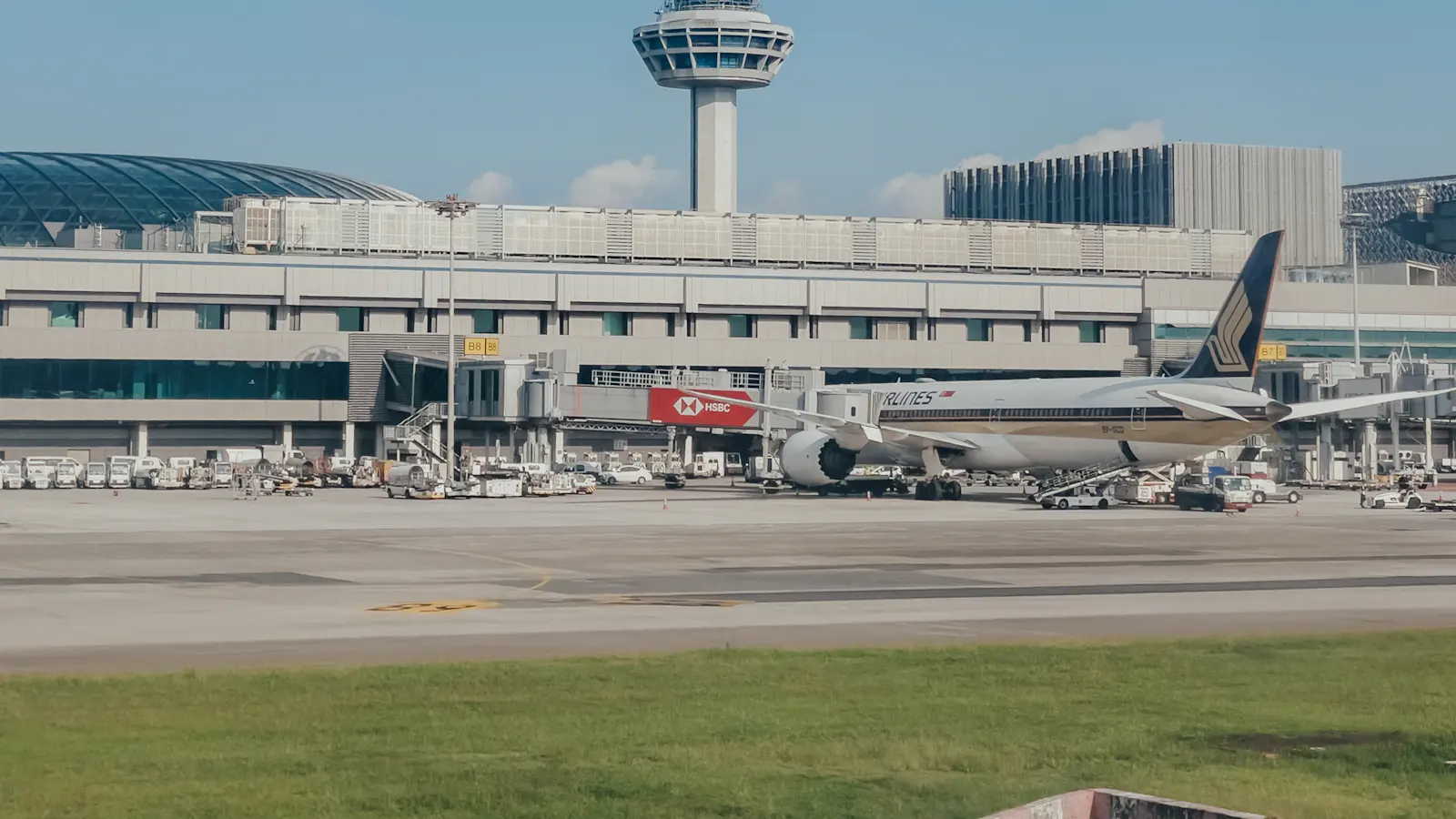
Your business class experience begins on the ground, and Singapore’s Changi Airport (SIN) serves as a formidable stage. Flying with Singapore Airlines grants you access to its flagship SilverKris Lounge in Terminal 3. Renovated in 2022 at a cost of S$50 million, the space is a sprawling 6,100-square-meter testament to the airline’s commitment to its premium passengers. The design is contemporary and residential, segmented into distinct zones for dining, working, and relaxing. The culinary offerings are a major draw; live cooking stations prepare signature Singaporean dishes like laksa and chicken rice, alongside a comprehensive buffet of international and local fare. The staffed bar serves everything from a proper Taittinger champagne to barista-crafted cappuccinos. The service is efficient and discreet, the environment a hum of quiet productivity. It is, in every sense, a world-class facility that reflects the airline’s brand: polished, expansive, and impeccably executed.
Garuda Indonesia, as a member of the SkyTeam alliance, typically utilizes a partner lounge at Changi, often the Marhaba Lounge in Terminal 3 or the Blossom Lounge in Terminal 4, depending on their operational terminal. While these are perfectly comfortable facilities, they cannot compete with the sheer scale and bespoke nature of the SilverKris Lounge. The experience is less brand-specific. You’ll find a solid buffet selection, ample seating, and shower facilities, but it lacks the signature Indonesian touch one might hope for. This pre-flight chapter is a clear win for Singapore Airlines. For travelers who value an extensive, brand-owned lounge sanctuary to begin their journey, SQ’s home-ground advantage is undeniable and sets a high bar before the aircraft doors even open.
Onboard Ambiance and Cabin Configuration
The tale of two carriers diverges most significantly once you are onboard. Singapore Airlines typically operates its Boeing 787-10 or Airbus A350-900 medium-haul aircraft on the Denpasar (DPS) route. These jets are fitted with the airline’s excellent regional Business Class product. Arranged in a 1-2-1 forward-facing configuration, every passenger has direct aisle access. The seat, designed by Stelia Aerospace, is a private cocoon with 26 inches of width and a pitch of 60 inches, converting into a 76-inch fully flat bed. This is an exceptional hard product for a flight under three hours, making this short-haul Singapore to Bali direct flight feel like a long-haul indulgence. The cabin’s color palette is a sophisticated mix of deep purples, bronzes, and muted greys. The ambiance is one of serene professionalism, a quiet space designed for maximum personal comfort and minimal distraction.
Garuda Indonesia, in contrast, most frequently deploys its Boeing 737-800 on this 1,670-kilometer journey. The business class cabin on this single-aisle aircraft features a more traditional 2-2 layout with recliner-style seats. While comfortable, with generous legroom and a substantial recline, they are not lie-flat. The cabin aesthetic, however, is where Garuda begins to tell its story. The bulkhead features intricate Indonesian patterns, and the color scheme often incorporates warm earth tones and vibrant batik-inspired accents. The feeling is less of a sterile corporate vessel and more of an invitation into Indonesian culture. While Singapore Airlines unequivocally wins on the “hard product” — the seat itself — Garuda offers an ambiance that feels warmer, more personal, and deeply connected to the destination. It’s a trade-off between a superior private space and a more communal, culturally resonant environment.
The Culinary Duel: In-Flight Dining and Service
Here, the competition becomes a matter of philosophy. Singapore Airlines’ service is legendary for its precision and consistency. The “Singapore Girl” is an icon, trained to deliver a service that is graceful, efficient, and anticipatory. On the Bali route, this translates to a meticulously executed meal service. A highlight is the “Book the Cook” option, allowing Business Class passengers to pre-order their main course from an extensive menu up to 24 hours before the flight. Options might include Singaporean classics like Lobster Thermidor or a perfectly grilled steak. The onboard menu is also substantial for a short flight, typically featuring an appetizer, a choice of three mains, and dessert, all served on Narumi porcelain. The wine list is curated by a panel of experts, and the entire process is a masterclass in aviation logistics and quality control.
Garuda Indonesia’s approach is defined by its award-winning “Garuda Indonesia Experience,” a service concept rooted in the nation’s famed hospitality. As one of their senior cabin crew members explained to me on a recent flight, “We are not just serving passengers; we are welcoming guests into our home.” This philosophy is palpable. The service is warmer, more conversational, and feels less scripted than SQ’s. It begins with a signature welcome drink, often a refreshing blend of tamarillo and passionfruit called Martebe. The menu proudly showcases Indonesian gastronomy. You are more likely to find an expertly prepared Nasi Goreng Spesial or a fragrant Sate Ayam than international fine-dining staples. The presentation is elegant, and the flavors are authentic and bold. While SQ’s service is flawless, Garuda’s is heartfelt. It is the difference between being perfectly served and being genuinely hosted.
Soft Product and In-Flight Entertainment
Beyond the seat and meal, the smaller details contribute to the overall experience. Singapore Airlines’ KrisWorld entertainment system is a market leader, accessible via a crisp 18-inch HD touchscreen. The content library is vast, with over 1,800 on-demand options, including new-release Hollywood films, complete television series box sets, and a wide array of music and games. Paired with high-quality, noise-canceling headphones, it’s an immersive system that can make the short flight feel even shorter. Wi-Fi is also available, and often complimentary for Business Class passengers, though speeds can be variable. The amenity kits on these shorter regional flights are typically not provided, but the well-appointed lavatories are stocked with Penhaligon’s amenities.
Garuda Indonesia’s in-flight entertainment, while not as deep as KrisWorld, offers a respectable selection of international films and television shows. Where it adds unique value is in its extensive library of Indonesian cinema and music, offering a cultural primer before you land. The airline does provide an amenity kit, even on the short hop to Bali. Typically from French brand L’Occitane, the small pouch with essentials like a lip balm and moisturizer is a thoughtful touch. The real “soft product” advantage for Garuda, however, is the holistic sense of place. From the boarding music featuring traditional gamelan sounds to the flight attendants’ elegant kebaya uniforms, the entire journey is an extension of the destination. This cultural immersion is a powerful differentiator, especially for travelers whose primary purpose is leisure and cultural exploration, a key part of what makes Bali a UNESCO-recognized cultural landscape.
The Bottom Line: Price, Value, and Loyalty
Ultimately, the choice between these two excellent airlines comes down to priorities and price. Singapore Airlines is almost always the more expensive option. A return Business Class ticket from Singapore to Bali on SQ can range from S$1,200 to S$1,800, depending on the season and booking window. Garuda Indonesia is often more competitively priced, with fares typically falling between S$800 and S$1,300. For this price difference, the SQ passenger is paying a premium for the superior seat, direct aisle access, a lie-flat bed, and the world-class SilverKris lounge. The value proposition is clear: it’s a globally consistent, top-tier product that minimizes the friction of travel.
The value proposition for Garuda Indonesia is different. You are trading a lie-flat bed for a more authentic and heartfelt service experience that acts as the perfect overture to a weekend trip from Singapore to Bali. For many, the warm, genuine service and the taste of authentic Indonesian cuisine at 35,000 feet is worth more than a flatbed on a 2.5-hour flight. Loyalty program affiliations also play a crucial role. Singapore Airlines is a pillar of Star Alliance, making it the default choice for those collecting miles with partners like United, Lufthansa, or ANA. Garuda Indonesia is a member of SkyTeam, appealing to frequent flyers of Delta, Air France, or KLM. The decision hinges on what you value more: the physical comfort of a superior hard product or the intangible warmth of a culturally rich soft product.
Quick FAQ on the Singapore to Bali Route
Q: What is the actual flight time from Singapore to Bali? A: The flight is consistently scheduled for approximately 2 hours and 45 minutes, covering a great circle distance of about 1,670 kilometers. Q: Which airline is better for business travelers needing to work? A: Singapore Airlines, due to its 1-2-1 seating configuration which offers more privacy, a larger and more stable table, and generally more reliable Wi-Fi. Q: Is there a significant difference in baggage allowance? A: No, both airlines offer a generous business class baggage allowance on this route, typically starting at 40kg, which is more than sufficient for a leisure trip. Q: Does Garuda’s service really live up to the hype? A: In our editors’ experience, yes. The airline has won the Skytrax award for “World’s Best Cabin Crew” multiple times, its unique service culture, which is a point of national pride and a key part of the Indonesian tourism identity.
Your journey from Singapore to Bali begins long before you feel the island’s warm sand between your toes. It begins with a choice. A choice between the predictable, polished perfection of Singapore Airlines and the warm, cultural embrace of Garuda Indonesia. There is no wrong answer. One offers a world-class seat; the other offers a window into the nation’s soul. For a comprehensive look at crafting the perfect itinerary, from selecting the right villa to uncovering the island’s best-kept culinary secrets, explore our complete Singapore to Bali Travel Guide.
Keep Reading
More from the Journal

Uncategorized
Bali Wellness Retreat Trends To Watch In 2027
9 min read

Uncategorized
Future Of Bali Spa And Medical Wellness 2027
9 min read
Uncategorized
How Ubud Retreats May Evolve By 2027
9 min read